
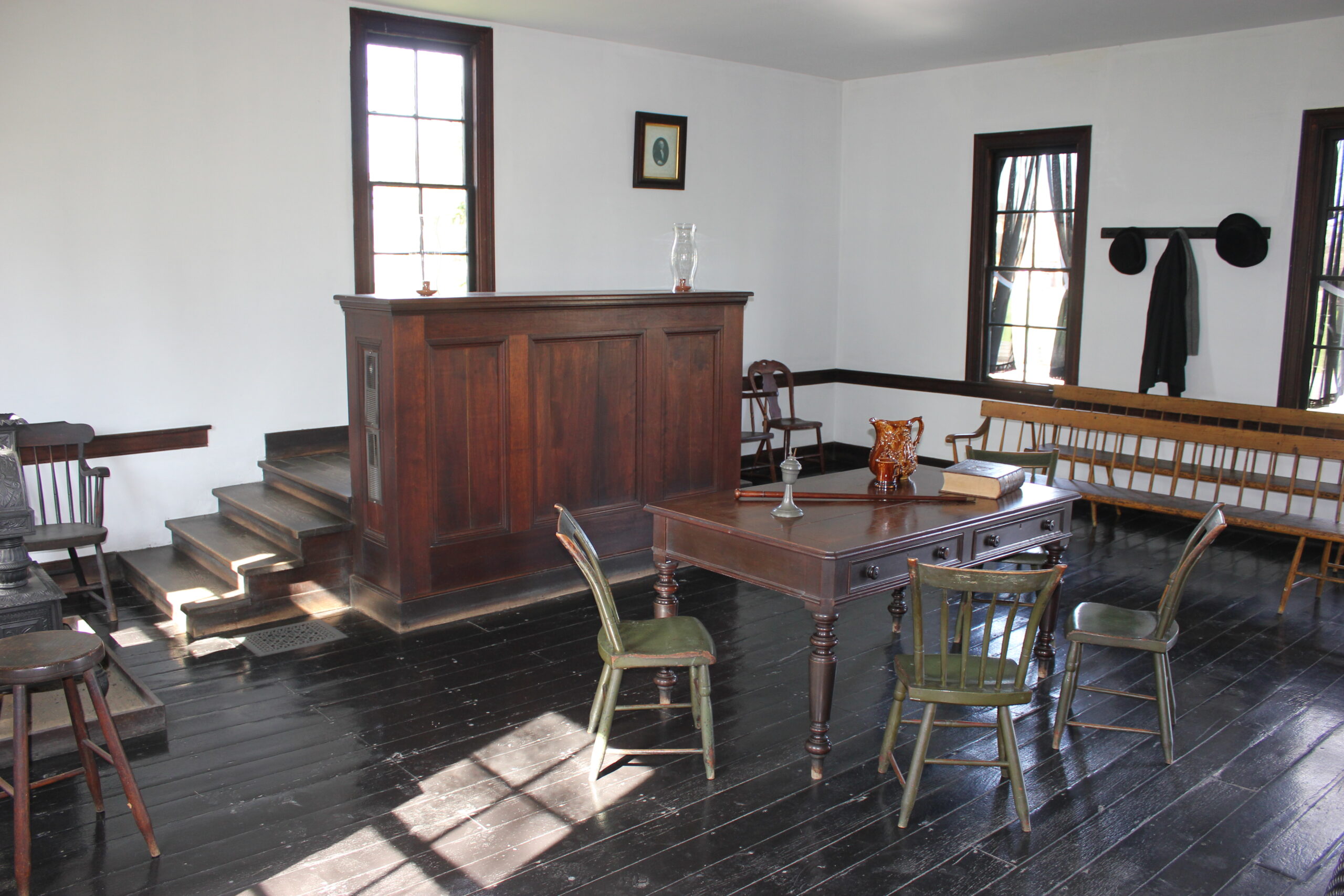
A circuit court building used by Lincoln
“He argued the other side of the issue:
Lincoln was known to respectfully and fairly argue the positive aspects of the opposite side of whatever position he sought to promote. This takes respectful listening to the next level!
Imagine how disarming this practice was to Lincoln’s opponents. After presenting their arguments in a balanced and unbiased fashion, no one could accuse him of not listening or not considering the alternate position.
Leaders should include this practice in their leadership discussions to affirm similar goals[i], suggest alternate tactics, and prevent disagreements from becoming personal.[ii]”*
As a circuit lawyer, Lincoln needed to rapidly convince a jury of the reasonableness of his client’s version of events to produce a fair, just, and balanced (and hopefully favorable) court decision.
He found the fastest path to influence was not to just assail the other position and only mention his position’s supportive arguments, as so many of his peers did. Lincoln knew people often wished to weigh both sides prior to forming an opinion, and by only advocating one side, people would still need to hear the other lawyer’s side before deciding. This delayed the outcome and gave the other lawyer more opportunity.
Lincoln would accurately present the other side’s position and benefits, then highlight the holes in that position’s logic, and finally lay out his position as fair and equitable. In this, Lincoln virtually took his jurors by the hand and walked them through their own decision-making process (while significantly reducing the other lawyer’s chance to win them over).
Yes, his careful listening, empathy, and judgment brought him more ‘wins’, but more importantly, his balanced approach prevented hard feelings and demonstrated respect to his opponents, clients, and jurors.
Try this yourself next time you need to convince others. The exercise will sharpen your mind, frame your argument, showcase your wisdom, and keep things objective vs. personal. I wish this peace-producing practice was more evident today in all realms, political, corporate, personal, to name but a few.
*Adapted from: “The Lincoln Authority – How to lead with authority in today’s organizations”, Keith N. Miles, p.46, Amazon ID# B00M9NZY1Q3
[i] White Jr., Ronald C. (2009-01-06), A. Lincoln: A Biography, Random House Publishing Group, Kindle Edition, Locations 10473–10475.
[ii] Fraker, Guy C., Lincoln’s Ladder to the Presidency: The Eighth Judicial Circuit, SIU Press, November 9, 2012, 62.